
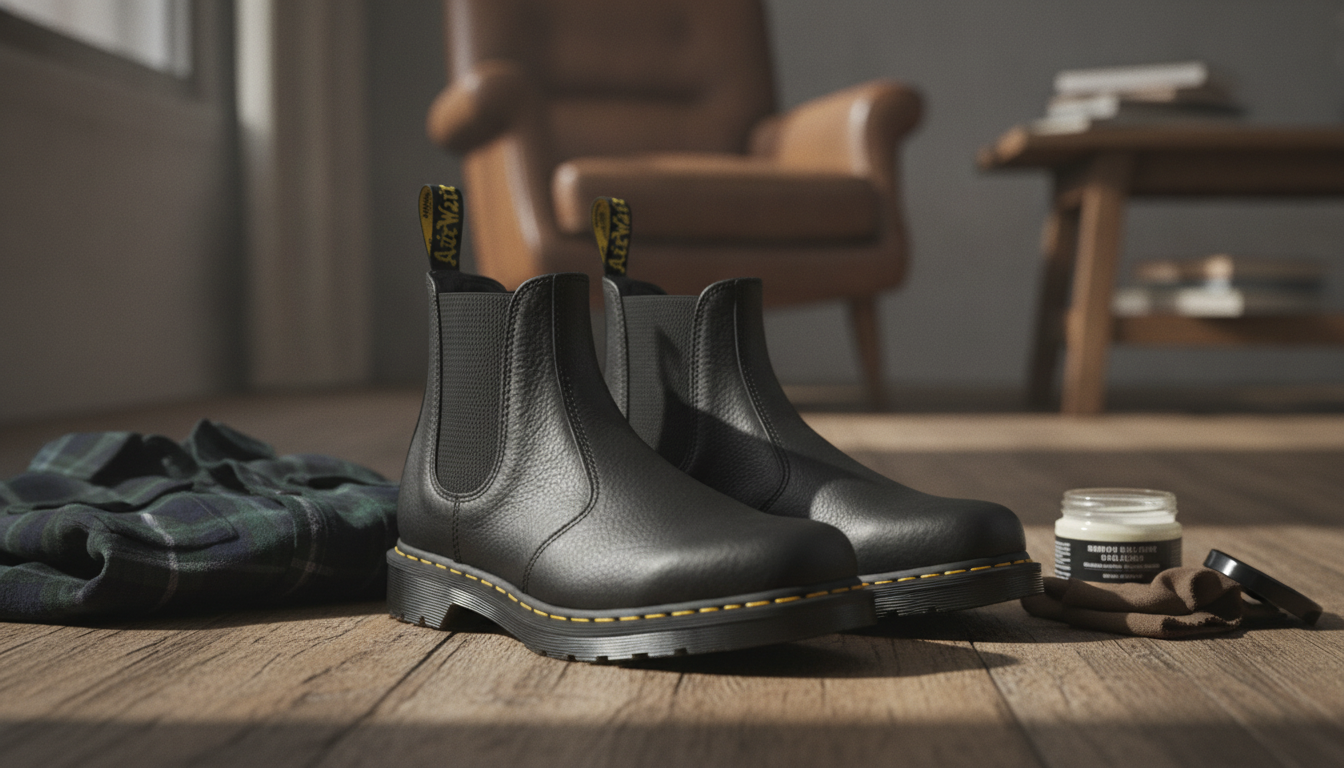
Men’s ankle boots from Dr. Martens are known for a sturdy build, unmistakable silhouette, and a break-in period that pays off in long-term comfort. The right black ankle boot can anchor a weekly rotation—easy to dress up with clean lines or lean casual with worn-in denim. Below is a practical guide to what to look for, how Dr. Martens ankle boots tend to feel on-foot, how to style them, and how to care for black leather so they stay sharp season after season.
Ankle boots are one of the most flexible footwear choices for day-to-day wear because they sit at a “sweet spot” height—tall enough to feel substantial, but not so tall that you have to plan your entire outfit around them.
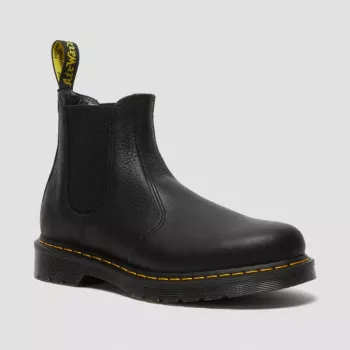
If you want a pair that can take repeat wear and still look intentional, Dr. Martens Men’s Black Ankle Boots are built around a classic black ankle-boot profile that’s easy to outfit-match. They’re especially well-suited for daily commuting, casual streetwear, and smart-casual looks where a sturdy boot still fits in.
When your boots arrive, it’s worth doing a quick, practical check before the first wear: look for consistent leather finish (no odd dull patches), secure sole bonding, straight stitching alignment, and smoothly functioning eyelets/hardware so lacing doesn’t snag or grind.
| Item | Details |
|---|---|
| Product | Dr. Martens Men’s Black Ankle Boots |
| Price | $142.51 |
| Availability | In stock |
| Color | Black |
| Product page | View details |
Comfort timeline: Expect a firm feel at first; comfort improves as the upper flexes and the footbed settles. Because these boots are priced as a long-wear staple, the value tends to increase with consistent care and occasional conditioning rather than “wearing them hard” and replacing them quickly.
Getting sizing right is less about chasing a perfect number and more about how the boot holds your foot. The goal is secure, stable contact without pressure points that turn into hot spots.
For general fit and comfort considerations, guidance from the American Podiatric Medical Association is a helpful reminder that supportive footwear should feel stable at the heel and roomy at the toes, not tight at the forefoot.
Durability is partly materials and construction—and partly what happens after you start wearing the boots. Leather that’s kept clean and conditioned stays more comfortable because it flexes instead of fighting your stride.
For a deeper perspective on keeping leather stable over time, the Smithsonian Museum Conservation Institute offers useful fundamentals about gentle handling, avoiding heat, and preventing drying—principles that translate well to everyday leather goods.
| When | What to do | Why it helps |
|---|---|---|
| After wears in wet/dirty conditions | Wipe clean and air-dry | Prevents staining and material breakdown |
| Every 2–4 weeks (typical use) | Condition leather lightly | Improves flexibility and reduces cracking |
| Every 1–2 months | Inspect sole edges and stitching | Catches wear early |
| Seasonally | Deep clean + protectant | Boosts longevity and appearance |
For brand background and broader model context, you can also reference Dr. Martens — Official Site.
Fit can vary based on foot width and the socks you plan to wear, so focus on toe room and secure heel hold rather than the number alone. If you’re between sizes, consider whether you’ll use thicker socks or add a slim insole, then break them in gradually.
Many people feel a noticeable improvement after several short wears, with a fuller break-in often taking a couple of weeks depending on frequency and leather stiffness. Start with brief indoor sessions, wear thicker socks to reduce friction, and consider light conditioning to help the upper flex more comfortably.
Wipe them with a soft, damp cloth, let them dry at room temperature, and condition periodically to keep the leather from drying out. Avoid soaking the boots or using high heat to dry them, and use a protectant if you expect light rain or street salt.









Leave a comment