
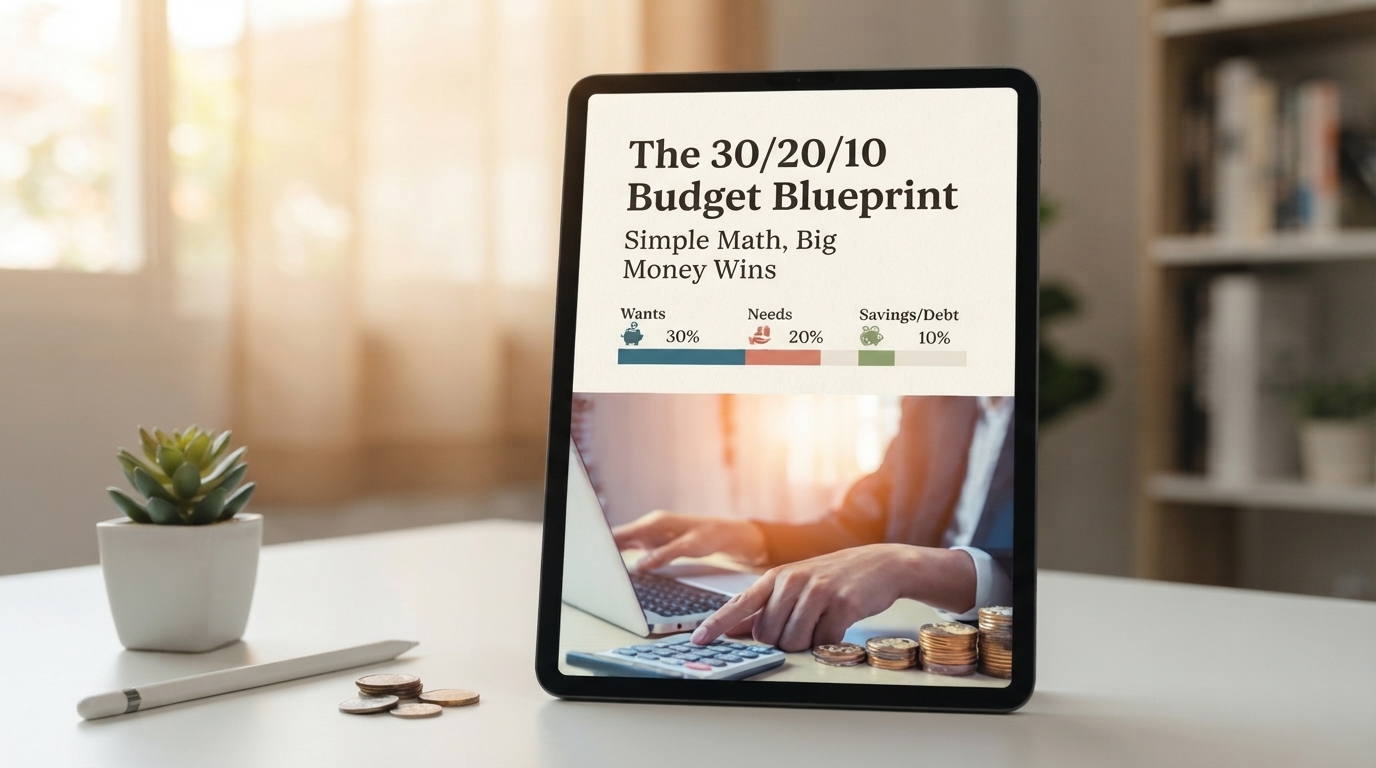
A budget works best when it’s easy to remember, quick to run, and flexible enough for real life. The 30/20/10 budget uses a simple percentage split so your money gets assigned to clear lanes before it gets spent. Instead of tracking every single purchase across dozens of categories, you focus on three totals that guide day-to-day decisions.
This approach is especially helpful if spreadsheets feel overwhelming, or if you’ve tried “perfect” budgeting methods that fall apart the moment an unexpected bill shows up. With 30/20/10, the rules are simple: allocate, spend, check in, adjust, repeat.
The 30/20/10 framework divides your take-home pay into three buckets that match how money behaves in real life: stability, progress, and enjoyment. The remaining income (the portion not covered by 30% + 20% + 10%) is flexible—use it where your household needs it most.
Think “must-pay” expenses: housing, utilities, groceries, transportation, minimum required payments, and basic insurance. If skipping it would cause immediate problems, it’s an essential.
This bucket builds future momentum: savings, extra debt payments, sinking funds for irregular expenses, or investing (based on your current priorities). To keep it effective, pick one main goal at a time.
Dining out, subscriptions, hobbies, small treats, and non-essential shopping fit here. The boundary rule is what makes it powerful: spend freely until the Fun bucket is empty—then pause.
| Bucket | Examples | Boundary rule |
|---|---|---|
| 30% Essentials | Rent/mortgage, utilities, groceries, gas, childcare basics | If it keeps life stable and is hard to skip, it belongs here |
| 20% Goals | Emergency fund, credit card payoff, sinking funds, retirement contributions | Moves future you forward; prioritize one main goal at a time |
| 10% Fun | Coffee runs, entertainment, non-essential shopping, upgrades | Spend freely until the bucket is empty—then pause |
You only need one starting number: your take-home pay (after taxes and benefits). If your paycheck fluctuates, use a conservative estimate so you don’t accidentally plan money you won’t have. If you need help understanding take-home pay and withholding, the IRS Tax Withholding Estimator can be a useful reference.
Use your monthly take-home amount. If you’re paid biweekly, multiply one paycheck by 26 and divide by 12 for a smooth monthly figure.
Those products are your three bucket totals for the month. Round to whole dollars to keep it simple.
List fixed bills inside Essentials. For Goals, choose the most urgent target—often a starter emergency fund (so surprises don’t go on a credit card) or the highest-interest debt.
The leftover money is where many budgets quietly fail—because unassigned dollars tend to disappear. Common options include irregular bills (annual subscriptions, car repairs), extra Goals, a buffer fund, giving, or work-related costs.
Here’s what the buckets look like with a $3,500 monthly take-home pay:
If your Essentials are higher than 30% right now, the system can still work. Reduce the most flexible bucket first (usually Fun), and aim Goals at stability—like a small buffer—until your monthly baseline feels less tight.
| Item | Bucket | Planned amount |
|---|---|---|
| Rent + utilities | Essentials | $850 |
| Groceries + gas | Essentials | $200 |
| Emergency fund transfer | Goals | $300 |
| Extra credit card payment | Goals | $400 |
| Dining out + streaming + hobbies | Fun | $350 |
Consistency doesn’t require daily tracking. A 10-minute weekly check-in prevents end-of-month surprises and helps you adjust before a bucket goes negative.
For general budgeting guidance and templates, the Consumer Financial Protection Bureau’s budgeting resources are a strong, practical reference.
If you want a ready-to-use layout for the method, The 30/20/10 Budget Blueprint: Simple Math, Big Money Wins (PDF printable) is designed to keep Essentials, Goals, and Fun clear at a glance—without overcomplicating the plan.
Yes—treat the percentages as targets, not strict rules. Start with your real numbers, adjust the most flexible bucket first (usually Fun), and use Goals to build stability or pay down high-interest debt.
Pick a primary focus based on urgency: a small emergency fund first if cash is tight, then prioritize high-interest debt. Once things feel stable, shift more of Goals toward long-term savings and investing.
Plan once per month, do a quick weekly check-in, and revisit your percentages after major life changes like moving, job changes, or new recurring bills.










Leave a comment